


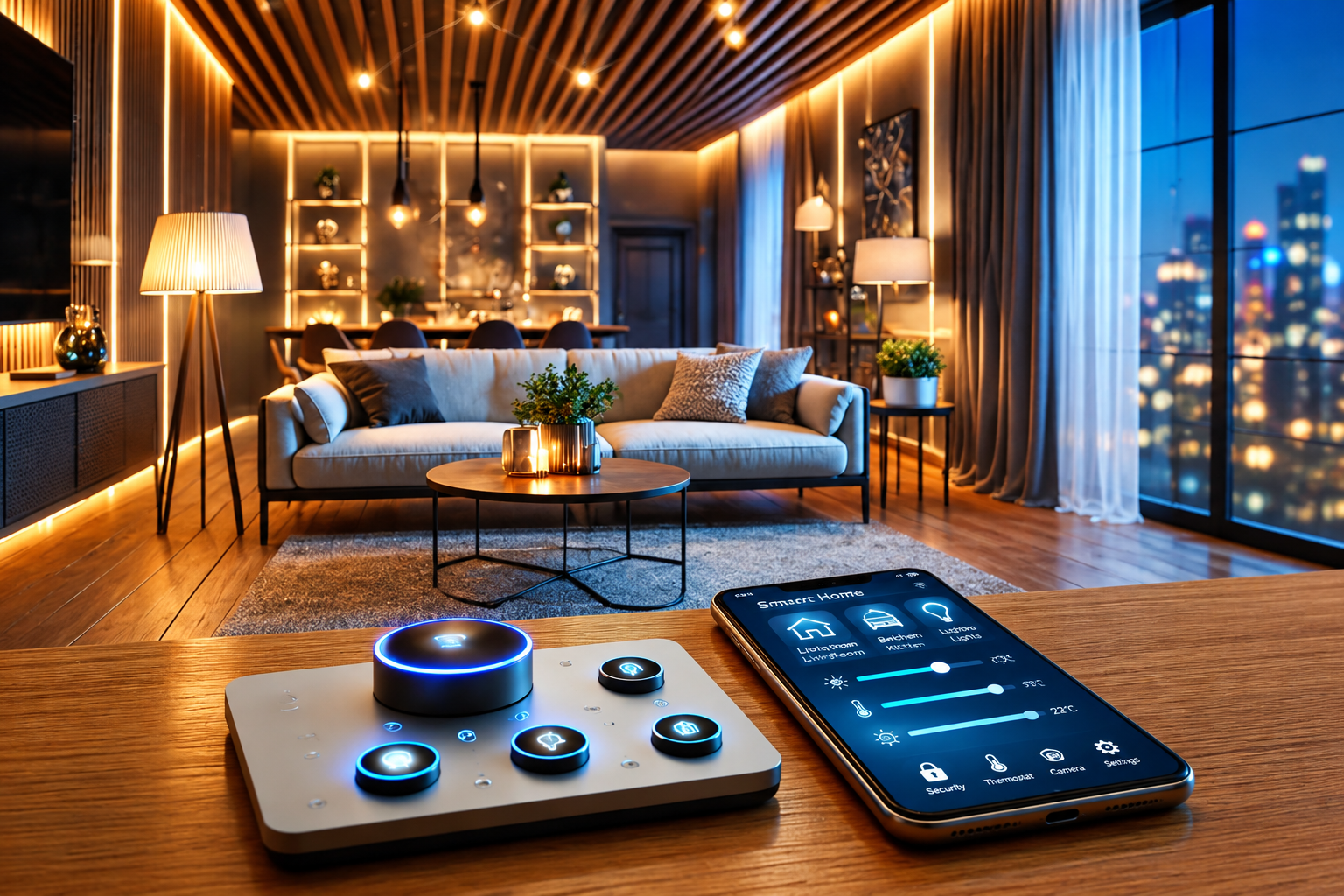

Smart lighting has become an important part of modern home automation. Instead of relying only on traditional switches, homeowners can now control lights automatically using smartphones, sensors, schedules, voice commands, and smart home systems.
Understanding the different types of smart lighting systems can help homeowners choose the right solution based on their lifestyle, property, and automation requirements.
From smart bulbs and switches to sensor-based and centralized lighting systems, there are several options available for creating a more convenient and connected home.
A smart lighting system is a lighting setup that allows users to control and automate lights using digital technology.
Depending on the system, users may be able to:
Smart lighting can be used in homes, offices, hotels, retail spaces, and other buildings.
There are several types of smart lighting systems, and each has different features and applications.
Smart bulbs are one of the simplest ways to introduce smart lighting into a home.
These LED bulbs can connect to a compatible smartphone application or smart home platform. Depending on the model, users can control brightness, color temperature, or even the color of the light.
Smart bulbs are suitable for:
One advantage is that they can often be installed in existing light fittings without replacing the entire electrical system.
However, the wall switch generally needs to remain powered for app-based control to work.
Smart switches replace conventional wall switches and provide digital control over connected lighting.
Unlike smart bulbs, smart switches can control standard compatible light fixtures without requiring every bulb to be a smart bulb.
Users can often control them through:
Smart switches can be a practical option for homeowners who want to automate multiple lights from existing wall-switch locations.
Smart dimmers provide more control than a standard on/off switch.
They allow users to adjust lighting intensity according to their needs. For example, bright lighting can be used while working, while lower brightness can be selected for relaxing in the evening.
Smart dimmers can also be integrated into automation scenes.
Before installation, it is important to check compatibility between the dimmer, wiring, and lighting fixtures.
Motion-activated lighting uses sensors to detect movement.
When movement is detected, the system can automatically turn on the lights. After a selected period without movement, the lights can turn off.
This type of smart lighting system is useful in areas such as:
Motion-based lighting can improve convenience because users do not have to manually operate the switch every time they enter an area.
Daylight-based lighting systems use sensors to detect the amount of natural light available in a room.
The automation system can use this information to adjust connected artificial lighting.
For example, if enough sunlight enters a room during the daytime, artificial lights can remain off or operate at a lower level.
This type of automation can help create a more consistent lighting environment while potentially reducing unnecessary lighting usage.
Voice-controlled smart lighting allows users to control lights using compatible voice assistants.
Instead of physically operating a switch or opening an application, users can issue voice commands to control connected lights.
Depending on the system, users may be able to:
Voice control can be especially useful for people who want hands-free operation.
Scene-based lighting combines multiple lighting settings into a predefined routine.
For example, a homeowner could create:
Movie Mode: Main lights dimmed while accent lighting remains active.
Work Mode: Brighter lighting activated in the workspace.
Night Mode: Selected lights remain at a low brightness level.
Scenes can often be activated using an application, smart switch, voice command, or another automation trigger.
This makes scene-based systems useful for homes where lighting needs change throughout the day.
Schedule-based systems automatically control lights according to predefined times.
For example, outdoor lights can be programmed to turn on in the evening and turn off later at night.
Indoor lighting can also be scheduled around daily routines.
Scheduling is particularly useful for:
Automated schedules can reduce the need for manual control.
Centralized lighting systems connect multiple lighting points to a common automation controller or management platform.
Instead of managing every light independently, users can control different rooms and zones from a central interface.
These systems can be suitable for:
Centralized systems can also integrate lighting with other automation features such as curtains, climate control, security, and sensors.
Understanding the types of smart lighting systems is useful, but it is equally important to understand their benefits.
Smart lighting allows users to control lights without physically reaching every switch.
Lights can be controlled through applications, voice commands, sensors, schedules, or automation routines.
Automation allows lights to respond automatically to certain conditions.
For example, motion detection can trigger hallway lighting, while a schedule can control outdoor lights.
Smart lighting can help reduce unnecessary lighting usage when properly configured.
Lights can automatically switch off when rooms are unoccupied or operate according to schedules and daylight conditions.
Actual energy savings depend on the lighting equipment, automation settings, usage patterns, and installation.
Automated outdoor and indoor lighting can contribute to a home's security setup.
For example, scheduled lighting can make a property appear occupied when residents are away.
Motion-triggered lights can also illuminate entry areas when movement is detected.
Smart lighting allows homeowners to create lighting environments for different activities.
A single home can have different lighting scenes for working, relaxing, entertaining, sleeping, and other activities.
The right system depends on several factors.
Some smart switches and dimmers may require specific wiring configurations. Check the electrical requirements before installation.
Make sure the lighting devices are compatible with your existing smart home ecosystem, application, hub, or voice assistant.
If you only need remote control, smart bulbs may be sufficient.
If you want motion detection, schedules, scenes, and integration with other home automation equipment, a more comprehensive system may be appropriate.
A single smart bulb may be suitable for one room, while a larger home may benefit from a centralized lighting automation system.
Choose a system that can support additional devices if you plan to expand your home automation setup later.
Smart lighting becomes even more useful when integrated with other home automation technologies.
For example:
Motion sensor → detects movement → automation system receives signal → lights turn on
Another example is:
Door opens → sensor detects activity → entrance lights activate
Smart lighting can also be integrated with compatible curtains, security systems, climate-control equipment, and other smart devices.
This creates a connected environment where different systems can work together instead of operating independently.
Smart bulbs, dimmers, and scene-based lighting can create different environments for entertainment, relaxation, and everyday activities.
Dimmable lighting and scheduled routines can provide more convenient control during morning and evening hours.
Bright task lighting can be combined with automated controls for better convenience.
Motion-activated lighting can reduce the need to operate switches manually.
Schedule-based and motion-controlled lighting can be useful for pathways, entrances, gardens, and security areas.
Smart lighting can help create different lighting scenes for meetings, focused work, presentations, and general use.
There are many types of smart lighting systems, ranging from simple smart bulbs and switches to advanced centralized automation systems.
Smart bulbs are suitable for simple upgrades, while smart switches and dimmers can provide more integrated control. Motion sensors, daylight sensors, schedules, voice commands, and lighting scenes can take automation further.
The right solution depends on the property's size, existing electrical setup, desired features, budget, compatibility, and future expansion plans.
A properly designed smart lighting system can make a property more convenient and responsive while integrating with a broader home automation ecosystem.
For homeowners planning a complete smart home, professional planning and installation can help ensure that lighting, sensors, switches, and other connected devices work together effectively.

