


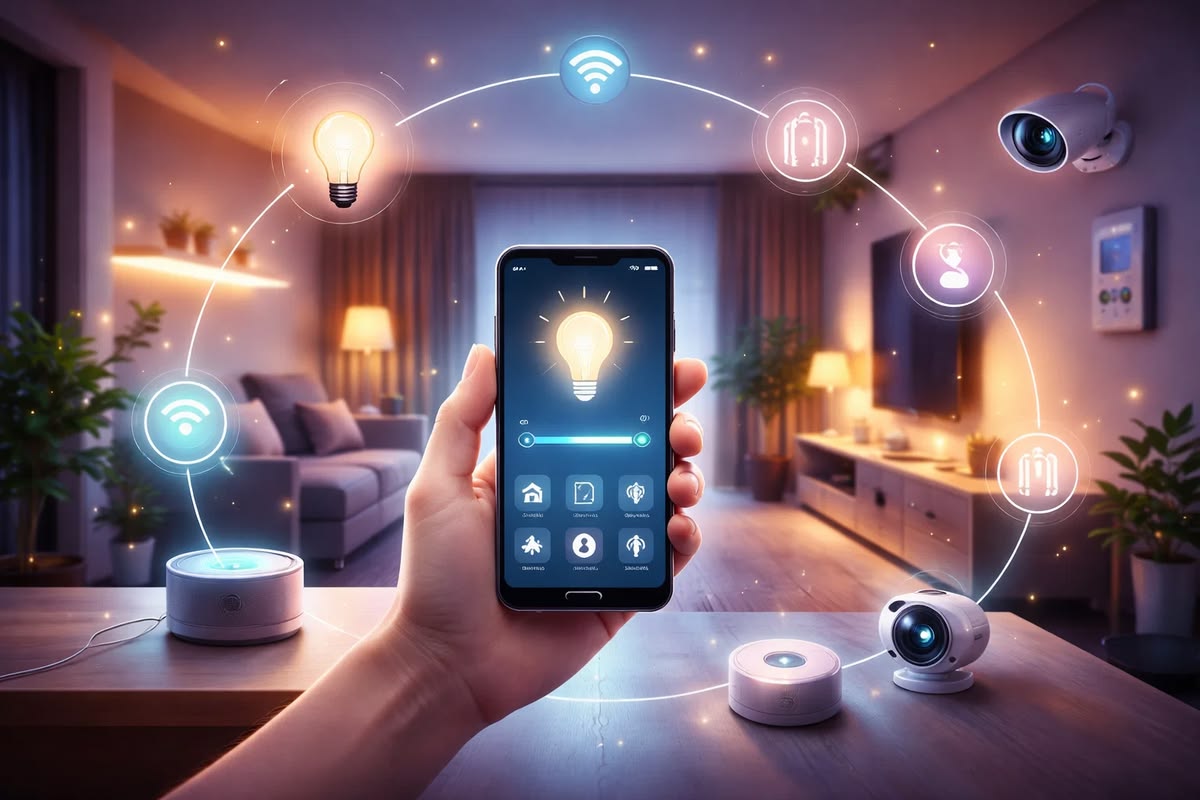

Smart lighting automation is changing the way modern homes use and control lighting. Instead of manually switching lights on and off, homeowners can use smart controls, sensors, schedules and mobile applications to manage lighting automatically.
From turning on entrance lights when someone arrives home to adjusting bedroom lighting before bedtime, automated lighting can make everyday routines more convenient. It can also help reduce unnecessary electricity consumption by ensuring lights operate only when required.
As home automation becomes more accessible, smart lighting has become an important part of connected homes. It can be integrated with other smart devices such as sensors, smart switches, security systems and centralized control panels.
Smart lighting automation is a system that allows lights to be controlled automatically or remotely using smart technology.
Traditional lighting generally requires a person to operate a physical switch. Smart lighting systems can provide additional control options through:
For example, homeowners can create a schedule that turns outdoor lights on in the evening and switches them off at a predetermined time.
A smart lighting system usually combines lighting devices with a control system. Depending on the setup, different components can work together to automate lighting.
Smart bulbs, smart switches and smart lighting controllers allow users to control lighting electronically. Smart switches can also be useful when homeowners want to automate existing lighting fixtures.
Motion and occupancy sensors can detect activity in an area. When movement is detected, the system can automatically turn lights on.
For example, hallway lights can activate when someone walks through the area and turn off after a specified period of inactivity.
Lighting schedules allow users to define when lights should operate.
A homeowner could schedule:
Connected lighting systems can allow homeowners to control lights through a smartphone or tablet. Depending on the system, users may be able to turn lights on or off, adjust settings and manage automation routines remotely.
A centralized control panel can provide a single interface for managing multiple smart devices. Lighting can be combined with other home automation functions to create convenient scenes and routines.
One of the biggest benefits of smart lighting automation is convenience.
Instead of walking around the house to operate different switches, users can control multiple lights from a centralized interface or automate them based on specific conditions.
For example, a "Good Night" routine could turn off selected lights throughout the house with a single command.
Lights that remain switched on unnecessarily can contribute to electricity consumption. Automated lighting can help reduce this waste by switching lights off when they are not needed.
Motion sensors can be particularly useful in spaces such as:
Lights can operate based on occupancy rather than remaining continuously switched on.
Lighting can also contribute to home security.
Automated outdoor lights can be scheduled to operate during the evening. Some systems can also activate lighting when movement is detected.
When homeowners are away, scheduled lighting can create the appearance that someone is at home.
Smart lighting can therefore work alongside other security solutions such as CCTV cameras, smart locks and sensors.
Different activities require different lighting conditions.
Smart lighting automation can allow homeowners to create customized lighting scenes for activities such as:
Instead of adjusting several lights individually, users can activate a predefined scene.
Remote access can be useful when homeowners are away from their property.
For example, if someone forgets to switch off a light before leaving home, they may be able to control it remotely through the connected system.
Remote control can also be useful for checking and managing outdoor lighting while traveling.
The living room can benefit from different lighting scenes. Bright lighting can be useful when cleaning or working, while softer lighting can create a more comfortable environment for relaxing.
Automated bedroom lighting can support daily routines. Lights can be scheduled to switch off at night or gradually adjust according to a programmed routine.
Kitchen lighting can be automated around daily schedules. Under-cabinet or task lighting can also be incorporated into specific scenes.
Motion-based lighting can be particularly convenient in bathrooms. Lights can activate when movement is detected and switch off after a period of inactivity.
Garden, driveway and entrance lighting can be scheduled or controlled through sensors. Automated outdoor lighting can improve visibility while also supporting home security.
Smart lighting becomes even more useful when integrated with other home automation devices.
For example, a homeowner could create an arrival routine where:
Lighting can also be connected with smart locks, sensors, security systems and other automation devices.
This creates a more connected and coordinated smart home environment.
Traditional lighting systems rely primarily on manual switches. They are simple and familiar, but they offer limited automation.
Smart lighting systems can provide additional features such as:
| Feature | Traditional Lighting | Smart Lighting |
|---|---|---|
| Manual switching | Yes | Yes |
| Mobile control | Usually no | Yes |
| Scheduling | Limited | Yes |
| Sensor-based control | Limited | Yes |
| Remote access | No | Yes |
| Lighting scenes | No | Yes |
| Integration with automation | Limited | Yes |
The right solution depends on the home's existing electrical setup, budget and automation requirements.
Before choosing a smart lighting system, homeowners should consider several factors.
The existing wiring and switches can affect which automation solution is suitable.
Consider how many lights need to be automated. Some homeowners may want to automate only selected rooms, while others may want a complete home solution.
Decide whether lighting should be controlled through switches, sensors, mobile applications, voice commands, touch panels or a combination of methods.
A good automation system should allow additional smart devices to be integrated later.
For example, homeowners may initially automate lighting and later add smart locks, CCTV, sensors or automatic gates.
Proper installation is important for safety and reliable operation. Professional automation specialists can assess the property and recommend a suitable setup based on the home's requirements.
Smart lighting automation does not necessarily require building a new house.
Many existing homes can be upgraded with smart switches, retrofit modules, sensors and other automation components. The exact solution depends on the electrical infrastructure and the type of lighting already installed.
This makes smart lighting an option for homeowners who want to gradually upgrade their existing property instead of installing a complete automation system at once.
Smart lighting is becoming an increasingly important part of connected homes. Future systems are likely to provide more intelligent automation, improved sensor integration and better coordination between different smart devices.
Instead of simply turning lights on and off, lighting systems can become part of broader home routines that respond to occupancy, schedules and user preferences.
As smart home technology develops, lighting can work together with security, climate control, entertainment and access-control systems to create a more integrated living environment.
Smart lighting automation offers homeowners a practical way to improve convenience, energy management, security and everyday comfort. Through smart switches, sensors, schedules, mobile control and centralized interfaces, lighting can become more responsive to the needs of the household.
Whether you are upgrading an existing home or planning a complete smart home, automated lighting can be an important part of the overall automation system.
With the right planning and professional installation, smart lighting can transform ordinary lighting into a connected and convenient part of a modern home.

