


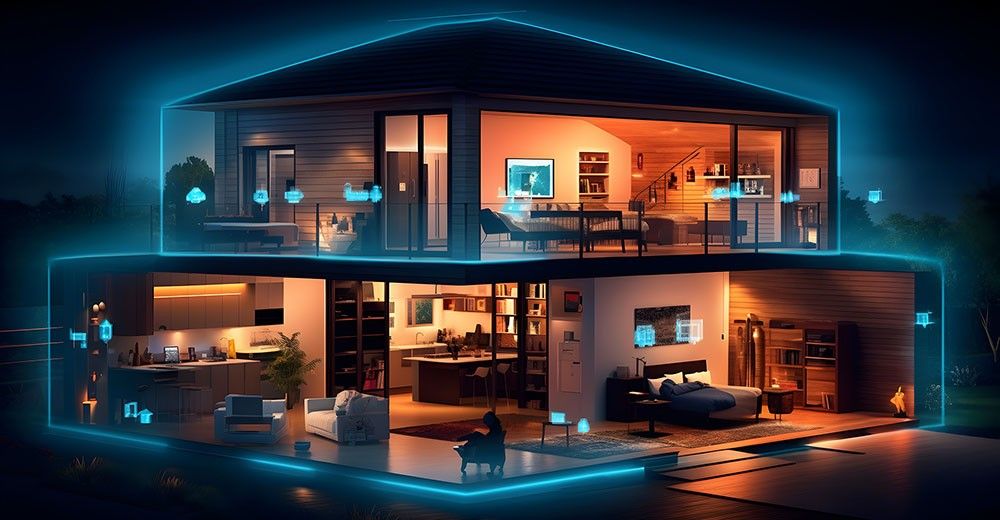

Home automation is becoming increasingly popular as homeowners look for better convenience, security, comfort, and energy management. From automatically switching lights on when someone enters a room to receiving an alert when a door is opened, smart technology can make everyday activities easier.
At the heart of many automated systems are smart home sensors. These sensors detect changes in the surrounding environment and communicate information to a smart home system. The system can then respond by activating lights, sending notifications, adjusting connected devices, or triggering other predefined actions.
Understanding the different types of smart sensors can help homeowners choose the right solutions for their homes and create a more efficient automation system.
Smart home sensors are electronic devices that detect specific changes or activities within and around a property. Depending on their design, they can detect movement, temperature, humidity, light, water, door openings, and other environmental conditions.
A sensor usually works as part of a larger smart home ecosystem. It collects information and sends it to a compatible controller, hub, application, or connected device.
For example, when a motion sensor detects movement in a hallway, it can communicate with a smart lighting system. The lights can then turn on automatically without requiring the homeowner to use a switch.
This combination of detection and automation is what makes sensors an important part of modern smart homes.
The basic working process of a smart sensor is relatively simple:
Detect → Communicate → Process → Respond
First, the sensor detects a particular event or environmental change. It then sends the information to a compatible controller or smart home platform. The system processes the information according to predefined rules and triggers an appropriate action.
For example:
Motion detected → Sensor sends signal → Automation system processes signal → Light turns on
Depending on the system, sensors may communicate using technologies such as Wi-Fi, Bluetooth, Zigbee, Z-Wave, or other communication protocols.
The right communication technology depends on the sensor, automation system, range requirements, installation environment, and compatibility.
There are several types of sensors available for residential and commercial automation. Each type has a different purpose.
Motion sensors detect movement within a specific area. They are commonly used for lighting automation and security applications.
For example, a motion sensor installed in a hallway can detect when someone enters and automatically activate the lights. After a predefined period without movement, the lights can be switched off.
Motion sensors can be useful in:
They can also work with compatible security systems to provide alerts when movement is detected.
Door and window sensors monitor whether an opening is open or closed.
These sensors can be useful for both security and automation. For example, a homeowner may receive a smartphone notification when a door is opened while they are away.
They can also trigger other automation actions. Opening a door could activate an entrance light, send an alert, or initiate another predefined routine.
Door and window sensors are especially useful for entrances, balconies, garages, and other access points.
Temperature sensors monitor the temperature of a particular room or area.
When connected to a compatible automation system, temperature information can be used to control devices such as air conditioners, heating systems, ventilation equipment, or fans.
For example, a smart automation system could respond when the room temperature rises above a selected level.
Temperature sensors can therefore contribute to both comfort and more efficient environmental control.
Humidity sensors measure the moisture level in the air.
They can be particularly useful in bathrooms, kitchens, basements, storage rooms, and other areas where excess humidity may become a concern.
A smart automation system can use humidity information to trigger ventilation or send an alert when the humidity level reaches a specified threshold.
Light sensors measure the amount of ambient light in an environment.
They can be used to automate lighting according to natural light conditions. For example, outdoor lighting can be configured to activate when the surrounding environment becomes dark.
Inside a home, light sensors can also work with compatible smart lighting systems to create lighting routines based on the amount of available natural light.
This can improve convenience while helping avoid unnecessary lighting usage.
Water leak sensors detect the presence of water in areas where leaks could cause problems.
They are commonly placed near:
When water is detected, the sensor can send an alert to the homeowner through a compatible smart home system.
Early detection can give homeowners more time to investigate a potential leak and take appropriate action.
Some smart environmental sensors are designed to detect smoke, air quality changes, or other environmental conditions.
Depending on the product, these sensors can provide notifications when unusual conditions are detected.
When integrated correctly with other smart devices, environmental sensors can become part of a broader monitoring and safety setup.
One of the main benefits of smart home sensors is automation.
Instead of manually controlling every device, homeowners can allow sensors to trigger actions automatically.
For example, lights can switch on when movement is detected, or a notification can be sent when a door opens.
Sensors can provide useful information about activity around a property.
Door, window, and motion sensors can help homeowners monitor entrances and detect unexpected activity.
When integrated with compatible security equipment, sensor information can contribute to a broader smart security system.
Sensors can help reduce unnecessary use of connected devices.
For example, motion sensors can switch lights off when a room is unoccupied. Light sensors can also help automate lighting based on natural light levels.
Smart sensors do not automatically guarantee lower energy bills, but well-designed automation can reduce unnecessary device operation.
Many smart home systems allow sensor events to generate notifications through a mobile application.
This allows homeowners to stay informed even when they are away from the property.
For example, a homeowner could receive an alert when a door opens or when a water leak sensor detects moisture.
Smart sensors can be used to create personalized routines.
A single sensor event can sometimes trigger multiple actions depending on the capabilities of the automation platform.
For example, detecting movement near an entrance could activate lights and trigger another compatible device.
Different rooms can benefit from different types of sensors.
Motion and light sensors can help automate lighting according to occupancy and ambient conditions.
Temperature, motion, and light sensors can support personalized comfort and lighting routines.
Water leak, smoke, temperature, and motion sensors can provide useful monitoring and automation.
Humidity and water leak sensors can be particularly useful in areas exposed to moisture.
Door and motion sensors can support lighting and security automation.
Motion and light sensors can be used for outdoor lighting and activity monitoring.
Before purchasing or installing smart home sensors, consider the following factors.
Start by identifying what you want the sensor to accomplish.
Do you need automated lighting? Security monitoring? Temperature tracking? Water leak detection?
Clearly defining the purpose will make it easier to choose the correct sensor.
Compatibility is an important consideration.
A sensor may not work with every smart home hub, controller, or application. Check whether the sensor supports the ecosystem already installed in your property.
Different sensors use different communication technologies.
Consider factors such as operating range, reliability, network requirements, and compatibility before selecting a device.
Some sensors operate using batteries, while others require a wired power connection.
Battery-powered sensors can provide flexible installation, but their batteries need to be monitored and replaced or recharged when necessary.
Some sensors are designed for relatively simple installation, while others may require wiring or professional configuration.
For larger automation projects, professional installation can help ensure that sensors are positioned correctly and communicate reliably with other devices.
Sensors provide the information required for many automated actions.
A smart home system without suitable sensors may have limited awareness of what is happening in the environment. Sensors allow the system to respond to real-world conditions.
For example:
Motion sensor → detects movement → automation controller receives signal → smart light activates
Another example is:
Door sensor → detects opening → system receives event → homeowner receives notification
These simple processes can be combined into more advanced automation routines.
As the number of connected devices increases, properly planning the sensor network becomes increasingly important.
For a small installation, homeowners may be able to configure individual smart devices themselves. However, larger automation projects can involve multiple sensors, switches, lighting systems, security devices, controllers, and other equipment.
Professional planning can help ensure that:
A professional smart home automation provider can also help select equipment based on the property's layout and the homeowner's requirements.
Smart home sensors are an important part of modern home automation. They allow smart systems to detect movement, temperature, humidity, light, water, door activity, and other environmental changes.
From automatically controlling lights to providing security notifications and detecting potential water leaks, sensors can support many practical applications around a home.
The best sensor depends on the purpose, installation location, compatibility, connectivity, power requirements, and overall automation system. Instead of selecting sensors based only on features or price, homeowners should consider how each device will work as part of the complete smart home ecosystem.
With the right combination of sensors, controllers, and connected devices, home automation can become more convenient, responsive, and personalized.

