


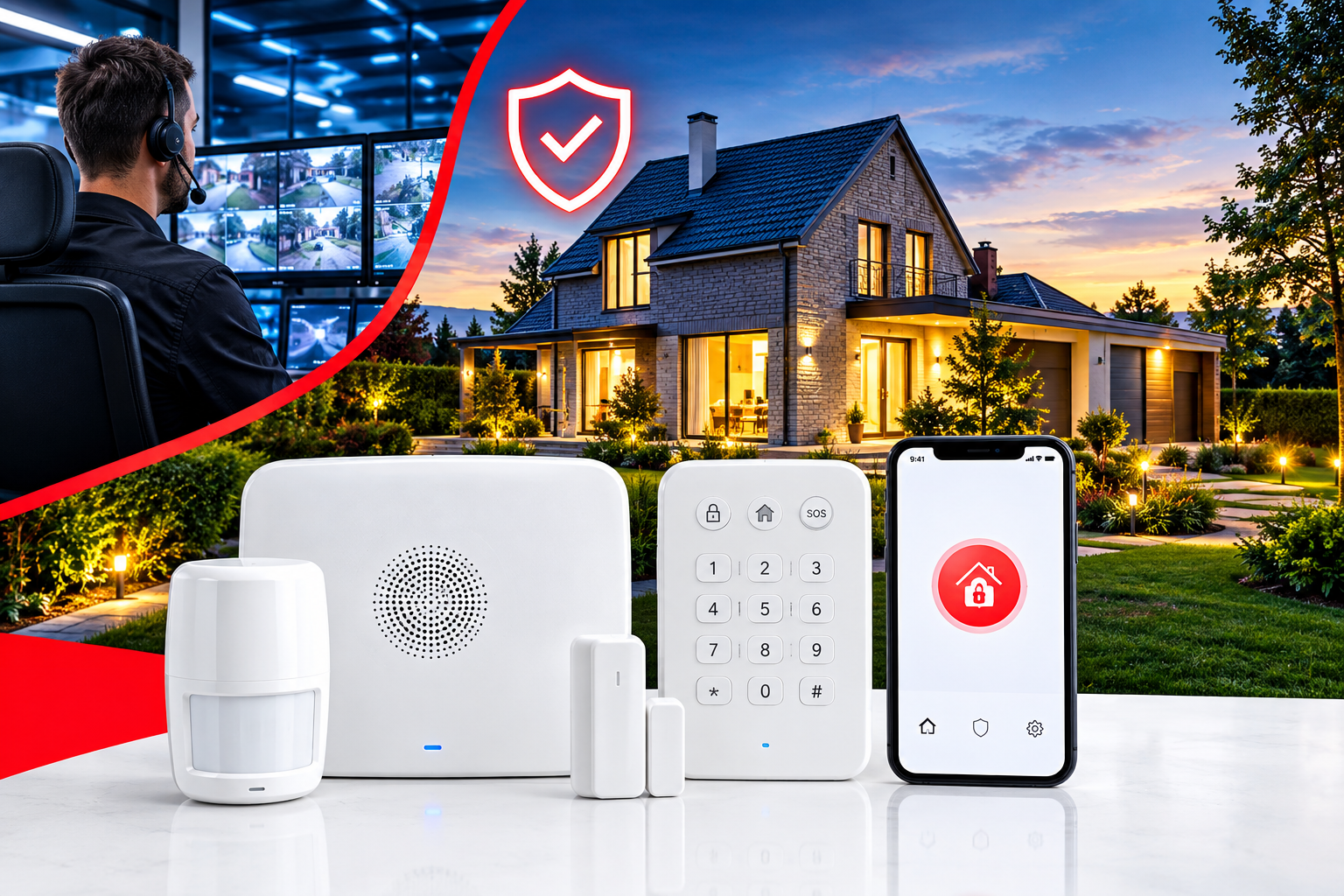

Smart home sensors are becoming an important part of modern home automation systems. They allow a home to detect movement, changes in temperature, door and window activity, lighting conditions, and other environmental changes. The information collected by these sensors can be used to trigger automated actions and make homes more convenient, secure, and energy efficient.
Instead of manually controlling every device, homeowners can use sensors to create automated routines. For example, a motion sensor can detect movement and trigger a light, while a door sensor can notify the homeowner when a door is opened.
Modern home automation systems can combine sensors with smart switches, lighting, security systems, smart locks, and other connected devices. Techtify provides home and office automation solutions along with products such as smart locks, smart switches, touch panels, and retrofit modules and sensors.
Smart home sensors are electronic devices that detect changes in their surroundings and send information to an automation system.
Depending on the type of sensor, it may detect:
The automation system can then use this information to perform a predefined action.
For example, when a motion sensor detects movement in a hallway, the system can automatically switch on the lights. When there is no movement for a certain period, the lights can be switched off.
Sensors provide the information required for many automated actions. Without sensors, a smart home system may depend heavily on manual commands or fixed schedules.
Using sensors can make automation more responsive to what is actually happening inside the home.
Some important benefits include:
Sensors can also be combined to create more advanced automation routines.
Motion sensors are among the most commonly used smart home sensors.
They detect movement within a particular area and can trigger connected devices.
Motion sensors can be used for:
For example, a motion sensor installed in a corridor can automatically turn on a light when someone enters the area.
Motion-based lighting can also help reduce unnecessary electricity usage because lights can be switched off when movement is no longer detected.
Door and window sensors are useful for both convenience and security.
These sensors can detect whether a door or window is open or closed. When connected to a smart home system, they can trigger notifications or automation routines.
For example:
Door sensors can also work alongside smart locks and security systems.
Temperature sensors monitor changes in the temperature of an area.
They can be used to improve comfort and energy management by providing information to an automation system.
For example, a temperature sensor can help a smart climate-control system determine when a room becomes too warm or too cold.
Possible applications include:
Temperature-based automation can reduce the need for continuous manual adjustment.
Light sensors detect the amount of light in an environment.
They can be used to control lighting according to natural daylight conditions.
For example, outdoor or indoor lights can be automated based on the amount of available light.
A smart lighting system could turn lights on when the environment becomes dark and turn them off when sufficient natural light is available.
This can improve convenience and potentially reduce unnecessary lighting usage.
Occupancy sensors are designed to determine whether a space is being used.
They can be particularly useful in offices, meeting rooms, classrooms, and larger homes.
An automation system can use occupancy information to control:
For example, lights and climate-control equipment can be managed according to whether a room is occupied.
Water leaks can cause significant damage if they remain undetected.
Water leak sensors can detect the presence of water in locations such as:
A connected system can send an alert when water is detected, allowing the homeowner to respond quickly.
Safety sensors can form part of a broader smart security system.
Depending on the system, smoke or other safety sensors can provide alerts when abnormal conditions are detected.
When integrated with connected devices, these sensors can help homeowners receive notifications even when they are away from the property.
However, smart features should complement—not replace—appropriate certified safety equipment and local safety requirements.
The real value of smart home sensors comes from connecting them to an automation system.
A basic automation sequence can work like this:
Sensor detects an event → Automation system receives information → Predefined rule is activated → Connected device responds
For example:
Motion detected → Smart controller receives signal → Light automation activates → Light turns on
Another example could be:
Door opened → Sensor sends signal → Security system processes event → Notification is sent
This allows the home to respond automatically without requiring constant manual control.
Smart sensors can also contribute to energy management.
Many household devices consume energy unnecessarily when they are operating in an empty room. Sensors can provide information about occupancy, lighting conditions, or temperature and allow automation systems to respond.
For example, a smart lighting system can turn lights off when a room is no longer occupied.
Similarly, climate-control systems can be configured to respond to room conditions where supported by the automation setup.
The actual energy savings depend on the equipment, configuration, usage patterns, and automation settings.
Security is another important application.
A combination of door sensors, motion sensors, smart locks, cameras, and alerts can provide homeowners with greater visibility into activity around their property.
For example, an automation system can be configured so that:
Techtify also provides CCTV surveillance solutions, allowing automation and security technologies to be combined as part of a broader smart-property setup.
Smart sensors are not limited to residential properties.
They can also be useful in offices and commercial spaces.
Possible applications include:
For businesses, automation can help create more consistent control over lighting, security, and other building systems.
Techtify's services include home and office automation solutions, making sensor-based automation relevant to both residential and commercial environments.
Smart sensors can generally be implemented using wired or wireless approaches, depending on the automation system.
Wired sensors use physical connections to communicate with the control system.
Advantages can include:
However, installation can require additional wiring work.
Wireless sensors communicate without requiring a dedicated physical signal cable between the sensor and controller.
Advantages can include:
However, wireless systems depend on factors such as battery life, communication protocol, range, and network reliability.
The appropriate approach depends on the property, existing infrastructure, automation platform, and installation requirements.
Before installing sensors, consider the following factors.
First determine what you want the sensor to accomplish.
For security, door and motion sensors may be appropriate. For climate control, temperature sensors may be more relevant.
The sensor should be suitable for the environment where it will be installed.
Consider factors such as:
Not every sensor works with every automation platform. Confirm compatibility with the controller and other smart devices before purchasing.
Some sensors require batteries, while others may use wired power.
For battery-powered sensors, consider expected battery life and ease of replacement.
If you expect to add smart locks, lighting, CCTV, climate control, or other automation features later, choose a system that can support future expansion.
Techtify's current offerings include home and office automation, smart locks, smart switches and touch panels, automatic gates, and retrofit modules and sensors. The company also provides training related to home automation installation and smart technologies.
This makes sensor-based automation an important part of a broader smart-property ecosystem.
A properly planned system can combine different technologies to create automated routines based on movement, access, temperature, lighting, and other conditions.
As smart home technology continues to develop, sensors are likely to become increasingly integrated with automation systems.
Future systems can combine more information from different sensors and connected devices to create more responsive automation.
For example, a home could combine:
Together, these technologies can create a more connected environment where different devices respond to real-world conditions.
Smart home sensors are an important component of modern home automation. From motion and door sensors to temperature, light, occupancy, and water sensors, each type can provide information that allows an automation system to respond automatically.
Sensors can improve convenience, support security, assist energy management, and make smart homes more responsive. They can also be used in offices and commercial properties for lighting, security, occupancy, and environmental management.
When planning a smart home system, it is important to select sensors based on the property's requirements, compatibility, installation method, power requirements, and future expansion needs.
With the right combination of sensors, smart switches, security devices, and automation controls, homeowners and businesses can create a more connected and efficient environment.

