


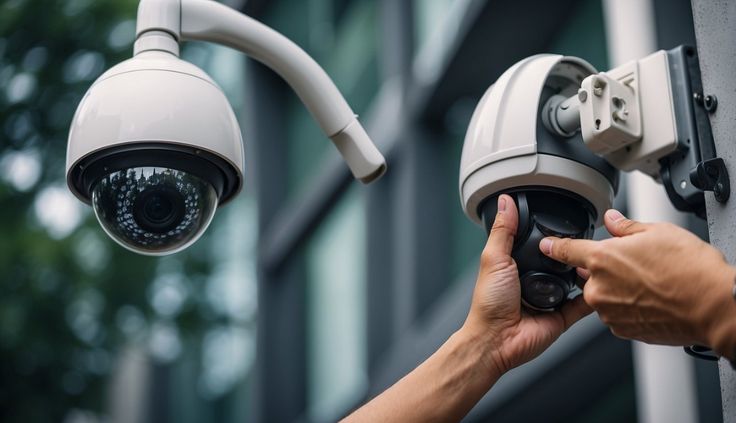

Installing CCTV cameras can significantly improve security at homes, offices, shops, warehouses, and other properties. However, simply installing several cameras does not guarantee complete surveillance coverage. Poor camera positioning can create CCTV camera blind spots, leaving certain areas outside the camera's field of view.
A blind spot is an area that cannot be properly monitored by a CCTV camera. These gaps may occur because of walls, pillars, furniture, large objects, incorrect camera angles, limited viewing angles, or poor installation planning.
Identifying and reducing these blind spots is an important part of creating an effective CCTV surveillance system.
CCTV camera blind spots are areas that fall outside the effective viewing range of a surveillance camera.
For example, a camera installed at the entrance may clearly capture people approaching the door but fail to cover the area immediately beside or behind a nearby wall.
Blind spots can also occur when objects block the camera's view or when the camera is installed too high, too low, or at an unsuitable angle.
Even a high-quality CCTV camera cannot monitor an area that is physically outside its field of view.
Blind spots can reduce the effectiveness of a surveillance system.
Some potential problems include:
A good surveillance plan should therefore consider camera coverage before installation rather than trying to correct blind spots later.
Several areas frequently require additional attention when planning CCTV installation.
Building corners can create difficult viewing angles. A camera positioned on one side may not provide sufficient coverage around the adjacent side.
For larger properties, cameras should be positioned strategically so important approaches and pathways are covered.
Walls, pillars, columns, and other structural elements can block part of a camera's view.
This is particularly important in offices, commercial buildings, warehouses, parking areas, and entrances where structural supports may obstruct visibility.
Before installing a camera, check its actual field of view from the proposed mounting position.
Entrances are among the most important areas to monitor, but they can still contain blind spots.
A camera positioned too far to one side may capture only part of the doorway. Similarly, a camera pointed directly toward a bright outdoor area may produce footage with reduced visibility.
Multiple viewing angles may be useful for larger entrances.
Staircases can be challenging because they involve different elevations and directions of movement.
A camera placed at the top of a staircase may not provide complete coverage of the lower section.
The camera angle should be planned according to the staircase layout and the movement of people through the area.
Vehicles, walls, trees, poles, and other structures can create blind spots in parking areas.
A single camera may not be sufficient for a large parking space. Camera placement should consider vehicle movement, pedestrian pathways, entry and exit points, and areas around parked vehicles.
Long corridors may appear easy to monitor, but doors, corners, elevators, and wall structures can create gaps.
Depending on the corridor's length and layout, multiple cameras may be necessary to achieve suitable coverage.
Large furniture, shelves, machinery, storage racks, and other objects can block cameras.
This is especially important in warehouses and retail stores where the layout may change over time.
When installing cameras, consider both the current layout and possible future changes.
Identifying blind spots does not always require complicated equipment. Start by reviewing the physical area that needs surveillance.
Walk around the property and identify areas that require monitoring.
Pay attention to:
Look at what each camera can actually see rather than relying only on its advertised viewing angle.
Objects close to the camera can block parts of the image, while distant areas may not provide enough detail for identification.
Lighting conditions can change throughout the day.
Check footage during daylight, nighttime, and periods when artificial lights are being used. A camera that performs well during the day may require different positioning or additional lighting at night.
A surveillance system should be planned according to the property's layout.
Mark important areas on a floor plan and determine which cameras will cover each location.
In critical areas, overlapping fields of view can reduce the possibility of a complete coverage gap.
For example, two cameras positioned from different directions can provide additional coverage around an entrance or large outdoor area.
Different locations may require different camera designs.
Depending on the application, options can include:
The appropriate choice depends on the location, required coverage, lighting conditions, and security objectives.
Camera height affects both the viewing area and the level of detail captured.
A camera installed too high may provide a wide overview but may make it more difficult to identify faces or other details. A camera installed too low may be vulnerable to tampering.
The mounting height should therefore be selected according to the application.
Dust, dirt, water droplets, spider webs, and other contaminants can reduce image quality.
Regularly inspect and clean camera lenses to maintain clear footage.
Lighting has a major impact on CCTV performance.
Direct sunlight, strong backlighting, darkness, and reflective surfaces can affect image quality.
Camera placement and lighting should be considered together during installation.
Indoor blind spots commonly occur around:
Indoor surveillance planning should consider the movement of people and changes to the interior layout.
Outdoor areas may have additional challenges, including:
Weather conditions and changing sunlight can also affect outdoor camera performance.
Avoiding installation mistakes can help reduce surveillance gaps.
Installing cameras without checking the complete field of view: The camera may leave important areas uncovered.
Using too few cameras: Large or complex properties may require multiple cameras.
Ignoring nighttime conditions: A camera may provide clear daytime footage but poor visibility at night.
Installing cameras behind obstacles: Pillars, signs, trees, and other objects can block the view.
Pointing cameras too high: This can provide a broad overview but may reduce useful detail.
Failing to review the footage: Installation should be followed by a practical coverage check.
CCTV systems should be installed responsibly and according to applicable laws and regulations.
Security cameras should focus on areas that genuinely require monitoring. When planning camera positions, avoid unnecessarily capturing private areas or neighboring properties.
For businesses, appropriate signage and internal policies may also be relevant depending on the location and use of the CCTV system.
A reliable CCTV system requires more than simply choosing cameras with high resolution. Camera positioning, viewing angles, lighting, coverage requirements, recording equipment, and property layout all need to work together.
Techtify provides technology and security solutions for different residential and commercial requirements. Professional planning can help identify potential CCTV camera blind spots before installation and create a surveillance layout suited to the property.
For more information about Techtify's technology and security solutions, visit Techtify.
A CCTV camera blind spot is an area that falls outside the camera's effective field of view or cannot be captured clearly because of positioning, obstacles, lighting, or other factors.
Review the camera's live view and recorded footage while walking through the property. Check corners, entrances, staircases, obstacles, and other important areas from different directions.
Usually, one camera is not suitable for covering a large or complex property. The required number of cameras depends on the property's size, layout, security requirements, and camera field of view.
Yes. Camera height and mounting angle directly affect the area that can be viewed and the level of detail captured.
Yes. Poor lighting, strong backlighting, glare, and shadows can reduce visibility even when an area technically falls within the camera's field of view.
CCTV camera blind spots can reduce the effectiveness of an otherwise well-designed surveillance system. Corners, entrances, staircases, parking areas, pillars, corridors, and areas behind large objects should receive particular attention during CCTV planning.
The best approach is to evaluate the property before installation, select suitable cameras, position them carefully, consider lighting conditions, and test the actual footage after installation.
With proper planning and regular maintenance, CCTV systems can provide more consistent coverage and help create a stronger security setup for homes and businesses.

