


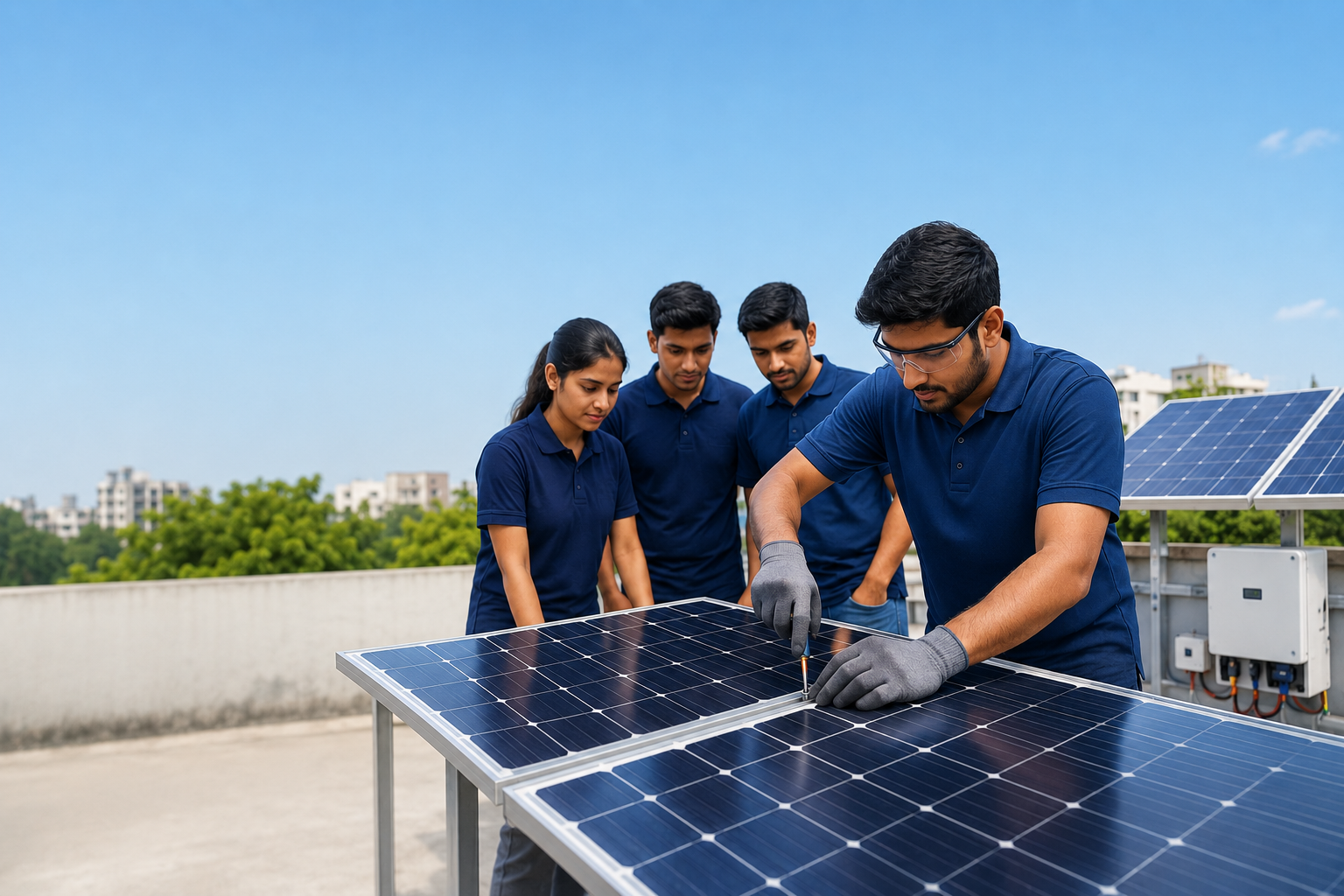

India is witnessing a remarkable transformation in the renewable energy sector, with solar power leading the way. As the country moves toward clean and sustainable energy, the demand for skilled solar professionals continues to grow. From residential rooftop installations to large-scale commercial solar projects, companies are actively seeking trained technicians, engineers, designers, and entrepreneurs.
If you're planning to enter this fast-growing industry, choosing the best solar training institute in India is the first and most important step toward a successful career.
This guide explains why solar training is important, what to look for in a training institute, career opportunities, and how the right course can help you become an industry-ready professional.
Solar energy is one of the fastest-growing industries in India. Government initiatives, increasing electricity costs, and environmental awareness have accelerated the adoption of solar power across homes, businesses, industries, and agriculture.
The renewable energy sector offers:
High job demand
Excellent salary opportunities
Entrepreneurship options
Long-term career growth
Environmentally responsible profession
According to the Ministry of New and Renewable Energy (MNRE), India continues to expand its renewable energy capacity, creating increasing demand for certified solar professionals and technicians.
Solar installation involves much more than mounting solar panels on rooftops.
Professional training helps students understand:
Solar photovoltaic (PV) technology
Solar system components
Electrical wiring
Site survey
Load calculation
System sizing
Inverter selection
Battery backup systems
Safety procedures
Testing and commissioning
Maintenance and troubleshooting
Practical knowledge reduces installation errors and improves system efficiency.
When selecting a solar training institute, consider the following factors.
The best institutes focus on hands-on learning rather than only classroom theory.
Students should receive training in:
Live rooftop installations
Solar panel mounting
Wiring practice
Inverter configuration
Electrical testing
Fault diagnosis
Practical exposure builds confidence and prepares students for real-world projects.
Learning from professionals who have worked on actual solar projects provides valuable insights into:
Project planning
Installation standards
Safety regulations
Client handling
Project execution
Experienced faculty bridge the gap between classroom learning and fieldwork.
Solar technology evolves rapidly. A quality institute regularly updates its syllabus to include:
Grid-connected systems
Off-grid systems
Hybrid solar systems
Net metering
Solar design software
Battery energy storage
EV charging integration
Top institutes provide:
Resume preparation
Interview training
Industry networking
Campus recruitment
Internship opportunities
Placement support helps students transition smoothly into professional careers.
Recognized certifications improve employment opportunities and employer confidence.
Government-supported initiatives such as the Suryamitra program emphasize standardized training and certification for solar technicians.
A comprehensive solar training program usually includes:
Basics of solar energy
Renewable energy concepts
Solar radiation
Energy conversion
Solar modules
Cell technology
Panel types
Performance characteristics
DC circuits
AC systems
Earthing
Protection devices
Load calculation
Panel sizing
Battery sizing
Inverter selection
Cable sizing
Roof mounting
Ground mounting
Wiring
Junction boxes
Safety equipment
Voltage testing
Performance analysis
Fault finding
System inspection
Cleaning procedures
Preventive maintenance
Troubleshooting
Performance optimization
Completing a professional solar course opens multiple career paths.
Popular job roles include:
Solar Installation Technician
Solar Design Engineer
Site Engineer
Project Coordinator
Service Engineer
Maintenance Technician
Solar Sales Consultant
EPC Engineer
Quality Inspector
Solar Entrepreneur
Many professionals also start their own solar installation companies after gaining experience.
Solar courses are suitable for:
ITI students
Diploma holders
Engineering graduates
Electricians
Technicians
Contractors
Entrepreneurs
Working professionals
Freshers interested in renewable energy
Many institutes also offer beginner-friendly certificate programs.
A successful solar professional should possess:
Technical knowledge
Problem-solving ability
Electrical understanding
Safety awareness
Communication skills
Practical experience
Teamwork
Project management
Continuous learning is essential because solar technology continues to evolve.
Professional training offers numerous advantages.
Certified candidates receive preference during hiring.
Skilled professionals generally command better salaries than untrained workers.
Many trainees establish successful businesses in:
Residential installations
Commercial projects
Solar maintenance
Solar consulting
Professional certifications improve credibility with employers and customers.
Before enrolling, evaluate the following:
Practical laboratory facilities
Experienced trainers
Updated curriculum
Live project exposure
Industry certification
Placement assistance
Student reviews
Internship opportunities
Affordable fees
Technical support after course completion
Avoid choosing an institute based solely on course fees.
The Government of India actively promotes skill development in renewable energy through initiatives led by the Ministry of New and Renewable Energy (MNRE). Programs such as Suryamitra focus on developing a skilled workforce for the expanding solar industry, combining classroom learning with practical training.
India's renewable energy sector is expected to continue growing rapidly over the coming years.
Increasing demand for:
Rooftop solar
Commercial solar plants
Industrial installations
Solar water pumping
EV charging infrastructure
Battery energy storage
means the need for trained solar professionals will continue to rise.
Professionals entering the industry today can expect long-term career stability and significant growth opportunities.
Choosing the best solar training institute in India can be the foundation of a rewarding career in one of the country's fastest-growing industries. Look for institutes that combine classroom instruction with extensive practical training, experienced faculty, industry-recognized certifications, and placement support.
Whether your goal is to become a solar technician, design engineer, project manager, or entrepreneur, investing in quality training equips you with the skills and confidence needed to succeed. As India's transition to clean energy accelerates, skilled solar professionals will remain in high demand, making now an excellent time to build a future in renewable energy.
The best institute depends on your goals. Look for programs that provide practical training, experienced faculty, recognized certification, and placement assistance. Government-supported initiatives and established private institutes both offer quality options.
ITI students, diploma holders, engineers, electricians, technicians, freshers, and entrepreneurs can all enroll, depending on the course requirements.
Course duration varies from a few weeks for certificate programs to several months for advanced diploma and technician courses.
Yes. The solar industry is expanding rapidly, creating strong demand for trained professionals across installation, design, maintenance, sales, and project management.
Yes. Many training programs include entrepreneurship modules covering business setup, project planning, and customer management, helping graduates launch their own solar ventures.